The TIPRA Motha Party has constituted its Central Working Committee (CWC), appointing eight senior leaders to the party's highest organisational body.
However, the announcement has raised an interesting political question: what is the rationale behind a state-based regional party adopting the nomenclature of a 'Central Working Committee' when its political presence and organisational influence remain largely confined to Tripura?
According to an official notice dated November 3, 2026, the newly constituted CWC includes B.K. Hrangkhawl, Jagadish Debbarma, Brishaketu Debbarma, Ranjit Debbarma, Purna Chandra Jamatia, Ratish Tripura, Paul Dangshu and Keneram Reang.
The Presidents of the Youth TIPRA Federation (YTF) and TIPRA Women Federation (TWF), along with the Chief Executive Member of the TTAADC, have also been included as invitee members by virtue of their respective positions.
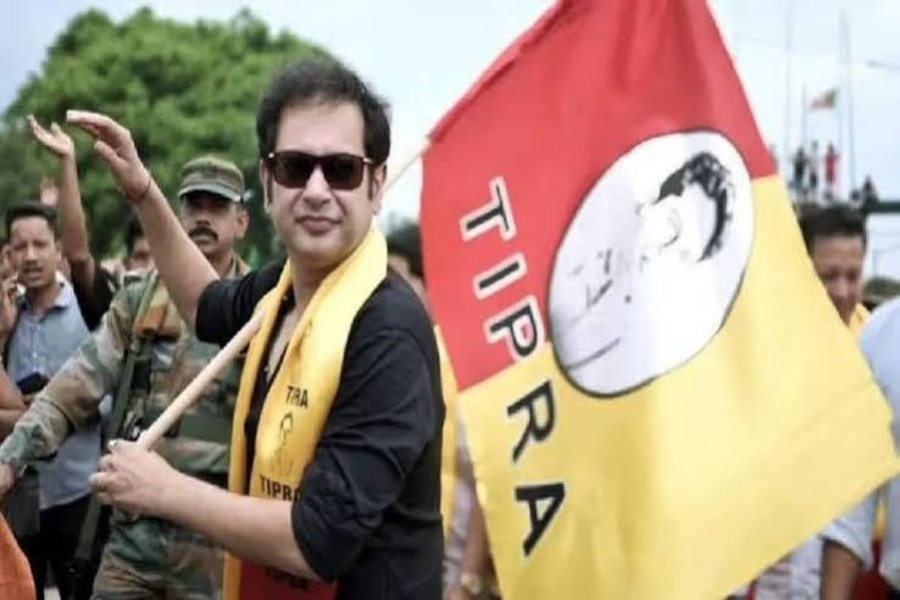
The most politically significant aspect of the announcement, however, is the decision of TIPRA Motha founder and royal scion Bubagra Pradyot Bikram Manikya to decline membership of the committee.
The notice states that he was invited and requested to become a member of the CWC but politely declined the position, while assuring his continued guidance to the party, the state and its people.
Interestingly, the development also raises questions about the party's organisational structure and political positioning. While national parties such as the BJP and Congress have central committees that oversee extensive political and organisational networks across multiple states, TIPRA Motha remains primarily a Tripura-based regional political force.
Although there is no restriction on a state-recognised political party establishing a Central Working Committee for its internal organisational functioning, the use of the term 'Central' inevitably invites comparisons with the organisational structures of parties having a much wider national presence.
Does the formation of a Central Working Committee signify an ambition to expand beyond Tripura, or is it simply an exercise in strengthening the party's internal organisational hierarchy?
For now, one thing is clear: while eight leaders have found a place in TIPRA Motha's newly constituted CWC, the person whose political stature remains central to the party's identity has chosen to stay outside the committee.