The Tripura Civil Society on Thursday launched a 24-hour statewide bandh to press for an eight-point charter of demands, including the introduction of the Inner Line Permit (ILP), deportation of illegal Bangladeshi migrants, and speedy implementation of the Tiprasa Accord.
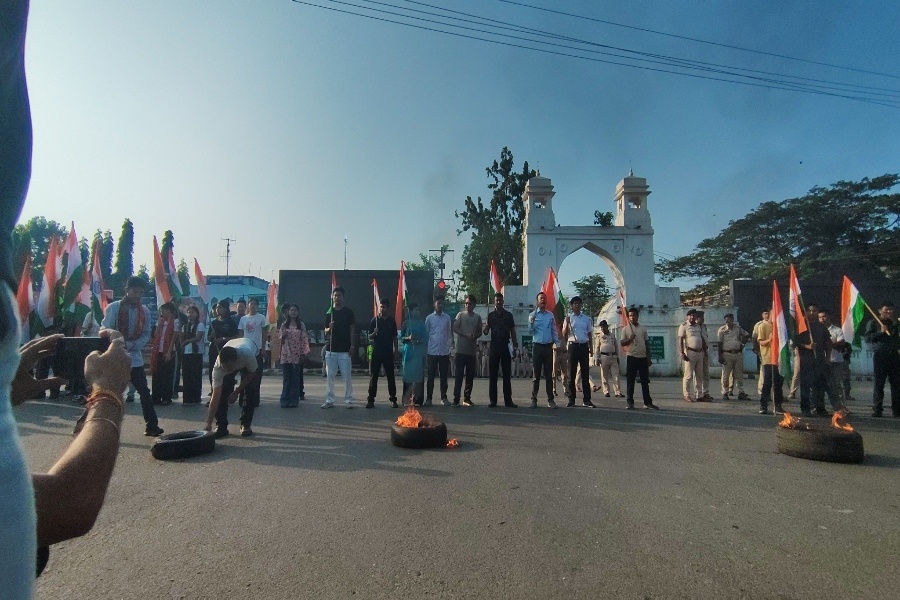
Protesters, raising slogans such as 'Illegal Bangladeshis go back,” blocked roads and held demonstrations in Agartala and at more than 45 locations across the state. The bandh has brought normal life to a standstill in several areas, with widespread picketing reported.
Tipra Motha Party MLA Ranjit Debbarma, who led the protest, said the civil society’s demands include immediate implementation of the Central Government’s directive to identify and deport illegal Bangladeshi migrants residing in the state.
"The Tripura Government has not taken any steps, unlike the governments of Assam, Haryana, and Delhi, which have acted against illegal Bangladeshi migrants. We are demanding the identification and deportation of such individuals from Tripura,” Debbarma said.
He further expressed dissatisfaction over the delay in implementing the Tiprasa Accord, signed 18 months ago between the Tipra Motha, Central Government, and Tripura Government, aimed at ensuring the welfare of the indigenous Tiprasa people.
“It has been 18 months since the accord was signed, but there has been no progress in its implementation,” he added.
Debbarma also reiterated the demand for the introduction of the Roman script for the Kokborok language, stating that despite raising the issue in the Tripura Legislative Assembly, no action has been taken so far.
Additionally, the society has called for the introduction of the Inner Line Permit (ILP) system in Tripura and strict measures against individuals using fake SC and ST certificates.
“The Tripura Government has yet to send any proposal to the Centre regarding ILP, which is one of our long-pending demands,” Debbarma said.
The bandh is being observed peacefully across most parts of the state, with protesters vowing to continue their agitation until their demands are addressed.