Large-scale bridge projects spanning the Brahmaputra River are ushering in a new phase of connectivity and economic integration in Assam and the wider Northeast, transforming the region’s transport and logistics ecosystem.
Among the most ambitious projects is the Dhubri–Phulbari bridge, a 19.3-kilometre structure that will emerge as the country’s longest river bridge once completed. Linking western Assam’s Dhubri with Phulbari in Meghalaya, the bridge is expected to dramatically improve mobility between the two states by providing a permanent road connection across the Brahmaputra.
At present, ferry services remain the primary mode of crossing the river in this stretch, often leading to delays and disruptions, particularly during the monsoon season. The upcoming bridge is set to eliminate these constraints, offering an uninterrupted, all-weather route that will benefit commuters, traders and transporters alike. Assam Chief Minister Himanta Biswa Sarma has highlighted the project’s potential to enhance trade flows within the Northeast and strengthen economic links with neighbouring Bangladesh.
The reduced travel distance is likely to lower logistics costs for key commodities such as agricultural produce, coal and limestone, providing a boost to local industries and rural livelihoods in both Assam and Meghalaya.
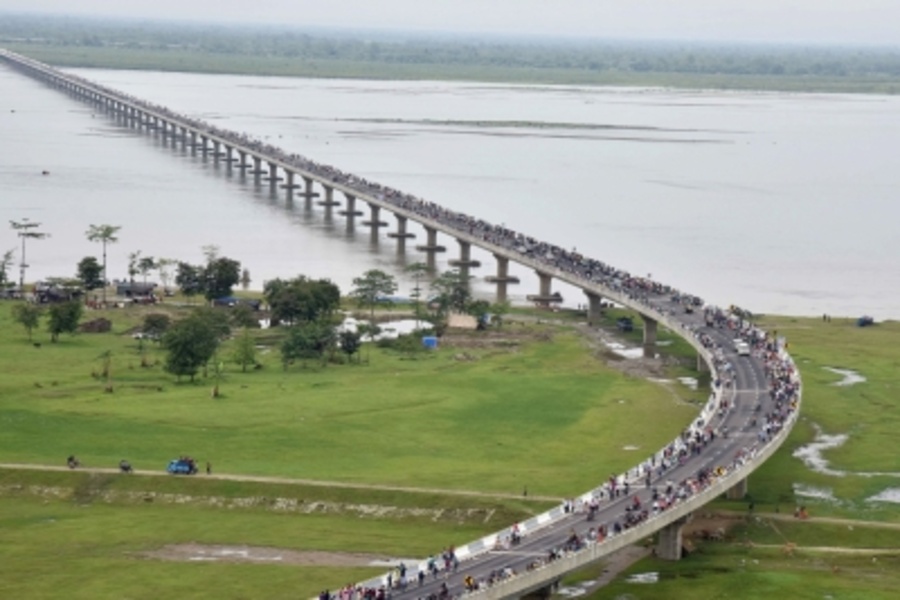
Another major contributor to Assam’s infrastructure transformation is the Bogibeel bridge, which spans nearly five kilometres and connects Dibrugarh with Dhemaji in Upper Assam. Operational since 2018, the bridge—India’s longest combined road and rail crossing—has significantly improved access to Arunachal Pradesh and remote districts along the river’s northern bank.
Prior to its construction, movement across the Brahmaputra in Upper Assam involved lengthy detours or dependence on ferries, resulting in hours of additional travel. The Bogibeel bridge has sharply reduced journey times and has become a critical transport artery for sectors such as tea, oil and natural gas, which are central to the state’s economy.
Experts note that these bridges represent more than just infrastructure achievements. Enhanced connectivity has improved access to healthcare, education and markets for communities living in flood-prone and border regions. The structures also play a vital role during emergencies, allowing faster deployment of relief and rescue teams during Assam’s frequent floods.
The Assam government has underlined that such connectivity projects support the Centre’s Act East Policy, which seeks to link the Northeast more closely with Southeast Asia through improved transport networks.
With multiple bridge and road projects underway, Assam is gradually overcoming the limitations imposed by its geography. The Brahmaputra, long viewed as a formidable barrier, is increasingly being transformed into a conduit for growth, opportunity and regional integration.