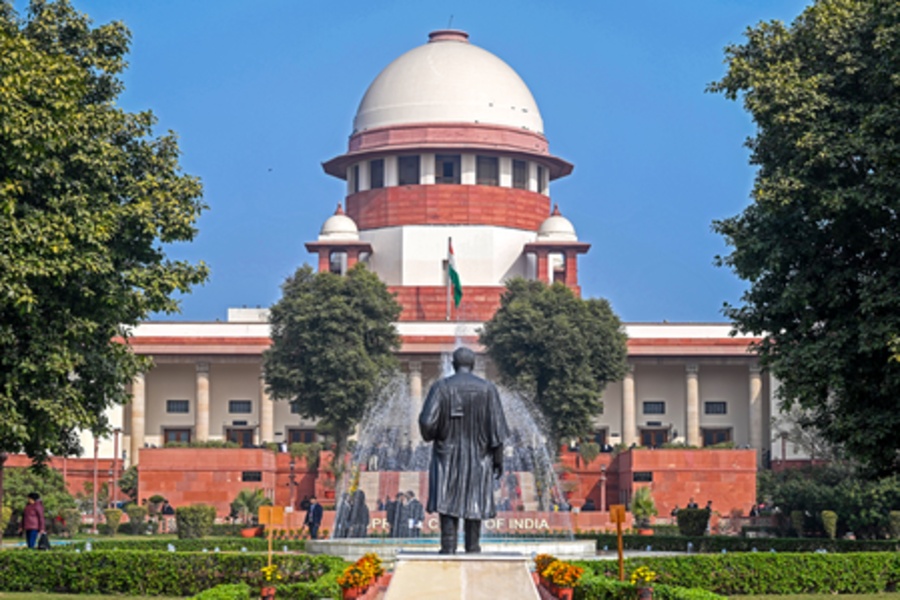
The Supreme Court has directed the Rajasthan government to intensify its crackdown on industrial pollution in the Bandi, Luni and Jojari rivers, ordering strict action against illegal factories, unauthorised wastewater discharge systems and industries operating in violation of land-use rules.
A Bench of Justice Vikram Nath and Justice Sandeep Mehta issued a series of directions to state authorities, highlighting widespread concerns over industrial pollution, inadequate effluent treatment facilities and shortcomings in the monitoring of illegal industrial activities.
The court instructed officials to immediately seal or remove identified illegal discharge points, pipelines, drains, manholes and other structures that have already been marked for removal. It made clear that enforcement measures should not be delayed pending the completion of a comprehensive survey.
To ensure accountability, the authorities have been directed to submit an Action Taken Report every 15 days, detailing the progress made in implementing the court's orders.
The Bench also called for an extensive investigation into industries allegedly operating illegally on residential and agricultural land. The probe will examine not only the industrial units but also their financial dealings, raw material suppliers, transportation networks, job-work arrangements and the individuals benefiting from such operations.
Authorities have been instructed to initiate proceedings for violations of revenue and land-use regulations, seize or remove machinery wherever legally justified, restore affected land and pursue appropriate legal action against those responsible.
Emphasising the need for sustained enforcement, the Supreme Court directed the Rajasthan government to establish a permanent district-level monitoring mechanism to prevent illegal industrial activities and curb pollution. The framework will bring together the Rajasthan State Pollution Control Board, district administrations, police, revenue and transport departments, local bodies and other concerned agencies.
The court further stressed the importance of regular inspections, clearly designated nodal officers and prompt action against offenders.
The Rajasthan State Pollution Control Board has also been directed to assess and recover environmental compensation from industries and individuals responsible for violations. It must provide details of the compensation imposed, the amount collected and the sums that remain outstanding.
In a parallel push to strengthen wastewater treatment infrastructure, the court ordered time-bound decisions on proposals to expand existing Common Effluent Treatment Plants (CETPs), establish new facilities and upgrade industrial Effluent Treatment Plants (ETPs) to Zero Liquid Discharge systems. The measures are aimed at preventing untreated industrial wastewater from entering the three river systems.
The court also turned its attention to illegal gravel and sand mining, directing authorities to take immediate action against activities that damage riverbeds and banks or obstruct the natural flow of water.
Officials have been asked to submit detailed information on mining locations, leases, extraction volumes and mining depths to the High-Powered Ecosystem Oversight Committee by October 15.
The directions seek to strengthen enforcement against industrial pollution and unauthorised mining while improving interdepartmental coordination, ensuring accountability and protecting the ecological health of the Bandi, Luni and Jojari rivers.