The Tripura Biotechnology Council (TBC) has continued to strengthen its efforts to promote scientific learning and research across schools in the state through the DNA Club Project.
To date, 222 schools in Tripura have benefitted from the initiative, receiving both financial assistance and technical guidance to support science-based experiments and research activities.
For the 2025–26 financial year, the Council has selected an additional 50 schools to receive grants and technical support. These funds will be utilized for purchasing laboratory equipment and facilitating hands-on research in life sciences, enabling students to engage more deeply with scientific exploration.
To further popularize and sustain the project, TBC has decided to provide annual grants to participating schools. As part of this commitment, the 50 schools enrolled during the 2024–25 financial year received their second-year grant of ?25,000 each—amounting to a total disbursement of ?12.5 lakh.
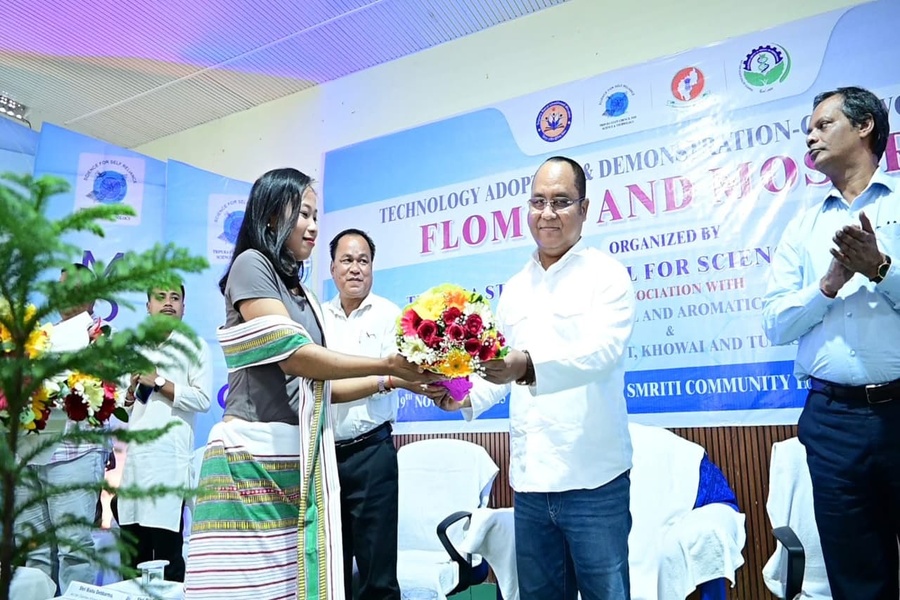
The grant distribution ceremony was held today at the Sukanta Academy Conference Hall in Agartala, graced by Science, Technology & Environment Minister Animesh Debbarma. During the event, teachers from the selected schools underwent hands-on training for 20 new science-based projects to be introduced in the second year of the program.
In his address, Minister Debbarma highlighted the importance of cultivating curiosity and a research-driven approach among students, particularly in the field of biotechnology. He expressed optimism that a scientifically empowered younger generation will lead the state toward new frontiers of innovation. The Minister also applauded the Tripura Biotechnology Council for its continued dedication to nurturing scientific talent.
The event was attended by key officials, including Science, Technology & Environment Department Secretary Chaitanya Murti, TBC Member-Secretary Mahendra Singh, and Joint Member-Secretary & Joint Director of the Directorate of Biotechnology Amon Sengupta, among others. Based on first-year evaluations, 28 teachers received recognition awards for their outstanding contributions, while 100 students from the 50 schools were honored as Best Performing Students.
A report book detailing the progress and evaluation outcomes of the DNA Club Project was also unveiled during the ceremony.
Approximately 300 teachers, headmasters, and students participated in the program. Award-winning teachers shared that the project has significantly enhanced students’ curiosity, motivation, and hands-on engagement in scientific learning—marking one of the program’s most impactful achievements.