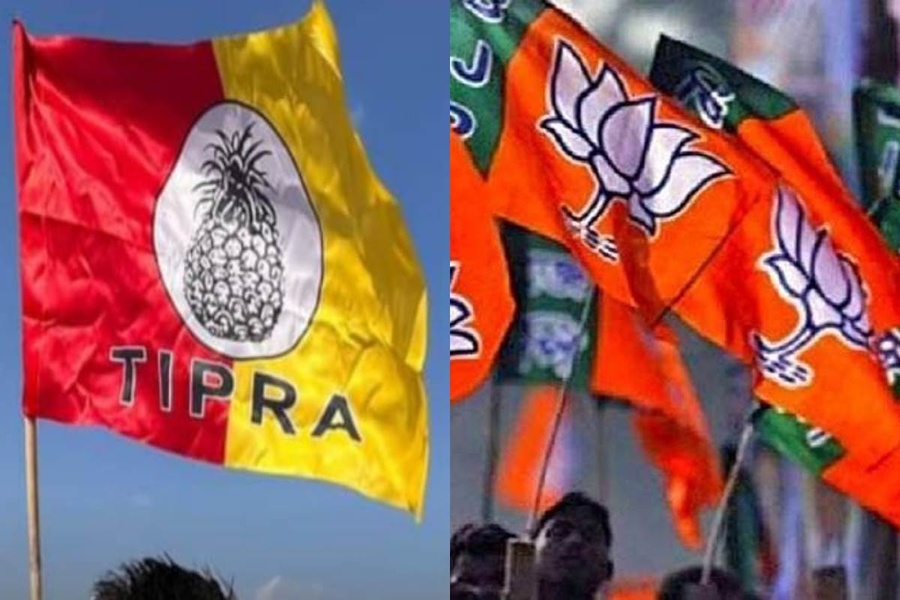
Tripura government has received bipartisan praise for denying the ruling BJP's ally, TIPRA Motha Party (TMP), led by Pradyot Kishore Manikya Debbarma, permission to hold a mass rally in Agartala on November 7.
The TMP has been accused of leveraging ethnic sentiments to enhance its chances in the upcoming Tripura Tribal Areas Autonomous District Council (TTAADC) election set for early next year. Pradyot recently faced backlash, even outside the state, for a provocative remark at a public event where he claimed ownership of Agartala.
Tensions rose when Pradyot insisted he would demonstrate the strength of his supporters in a city he considers his own. This has led to significant criticism from various political factions, accusing him of fostering communal discord and threatening the state's peace.
Internal challenges have already been troubling the BJP, with rifts and a weakened organization due to the absence of its president and state committee. However, it is the actions of its ally, the TMP, that have reignited controversy.
Citizens and civil society groups have voiced concerns about the TMP's pursuit of identity-based politics, warning that it jeopardizes Tripura's longstanding communal harmony. The situation intensified after the TMP's youth wing sought permission for a large rally in Agartala, which raised fears of reopening past wounds.
Recalling the violence from a similar rally organized by the Indigenous People’s Front of Tripura (IPFT) in 2009, the state police are wary, remembering the chaos that ensued, resulting in injuries to numerous individuals, including police officers.
With lingering memories of the 2009 unrest, residents have welcomed the government's firm decision to deny the TMP's rally request, viewing it as a necessary step towards peace and unity.
In a concerning turn of events, Motha supporters have publicly declared their intentions to showcase their influence, with many asserting that most non-tribals are immigrants. The rally has also seen an uptick in anti-Bengali rhetoric from surrendered extremists, who have even issued threats on social media.
But Pradyot has not responded, which some interpret as tacit approval of these sentiments.
Support for the government's stance has emerged from civil society organizations, community leaders, and even opposition parties like the CPI (M) and Congress, all emphasizing that no political entity should be permitted to incite communal fear for electoral advantage.
As frustrations mount regarding the TMP's apparent efforts to divide communities, the message from Tripura's citizens is unmistakable: prioritizing public safety and communal unity is essential over divisive political agendas.
The government's decisive action has restored confidence among residents that peace and stability will not be sacrificed for political gain.