Tripura’s Horticulture and Soil Conservation Department has implemented a series of initiatives aimed at expanding orange cultivation in hilly regions and boosting year-round flower production, Minister Ratan Lal Nath announced today.
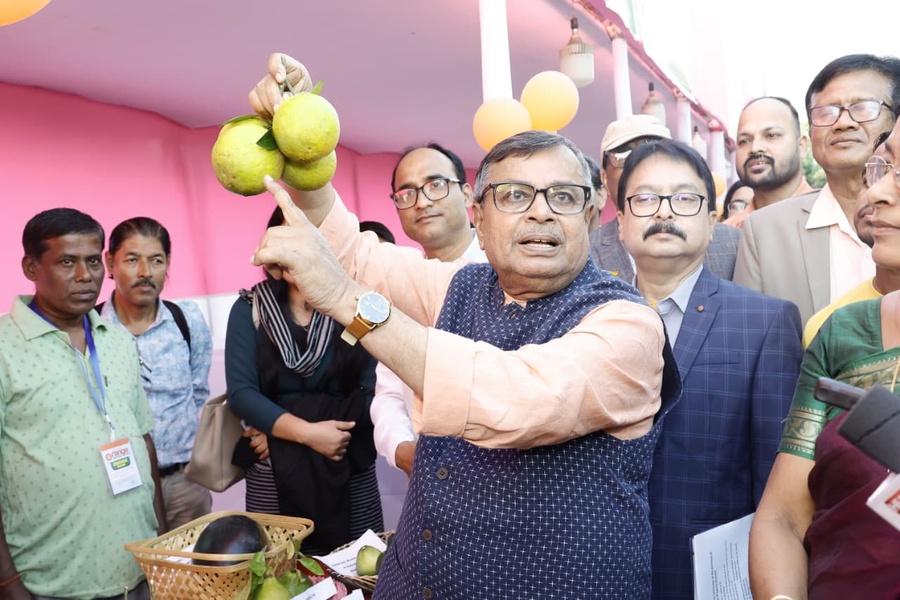
The Minister shared the updates after inaugurating the newly established Centre for Floriculture and Landscape and the State Level Orange Festival 2025 at the Badharghat Progeny Orchard in Agartala.
Highlighting the crucial role of agriculture, he said, “Nearly 46% of the state’s contribution comes from farmers, with the rest from tourism, services, and other sectors. There was a time when agriculture was neglected, but interest has grown again.”
Nath cited examples of successful local cultivation, including a farmer from Jirania earning ?100 per piece by selling Malta oranges grown on his land. He noted that besides Jampui Hills, areas such as Sakhang and Killa have also emerged as orange-growing regions.
He emphasized that the government has consistently supported farmers since coming to power. “We want employment in every home. Earlier, there were no significant efforts to cultivate onions, but our agricultural scientists have shown that Tripura can produce them in good quantity. We have also started cultivating ARC potatoes, which are in high demand. This year, we are hosting the Orange Festival here in Badharghat. Over 100 orange farmers have joined us,” he added.
According to the Minister, the total area under orange cultivation in Tripura now stands at 3,846 hectares, producing 16,538 metric tonnes, with an average yield of 4,300 kg per hectare.
Following expert recommendations, the department is expanding orange cultivation in the hilly areas of Baramura in West Tripura, as well as in Khowai, Gomati, and the Sakhan Hills of Dhalai district.
Between 2018–19 and 2025–26, 353 hectares of new land have been brought under orange cultivation, with 80 hectares added this year alone. During the same period, 228 hectares of old orchards have been rejuvenated at a cost of ?2,000 per hectare, including 31 hectares revived this year.