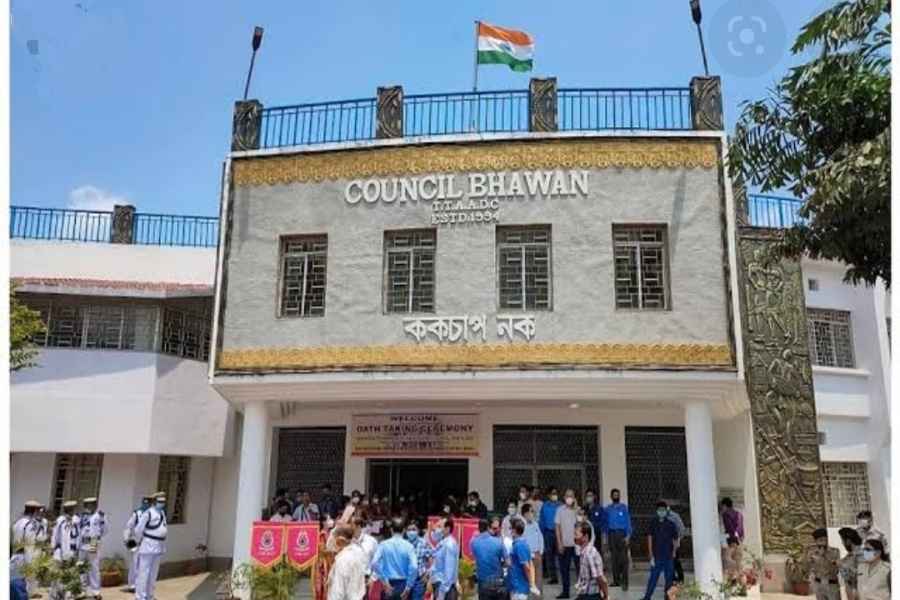
The Chief Executive Member of the Tripura Tribal Areas Autonomous District Council (TTAADC), Purna Chandra Jamatia, has raised serious administrative and constitutional concerns over the recent declaration of the Bishramganj Nagar Panchayat, alleging that portions of TTAADC land were included without mandatory consent from the Council.
In a formal communication addressed to the Chief Minister of Tripura, Jamatia stated that land historically and administratively under the jurisdiction of TTAADC has reportedly been brought within the limits of the newly declared Nagar Panchayat.
He emphasized that this inclusion was carried out without any consultation, consent, or joint verification with the District Council, which he termed a violation of established constitutional and administrative norms.
Highlighting past precedents, Jamatia pointed out that formal consent had earlier been obtained from the TTAADC for setting up major government institutions in the same area, including the District Hospital, the Superintendent of Police Office, and the TGBRSETI, as well as for several individual land holdings. These instances, he noted, clearly establish that the area falls within the territorial jurisdiction of the TTAADC.
Expressing concern over what he described as a unilateral decision by the state administration, the TTAADC Chief Executive Member warned that such actions undermine the constitutional status, autonomy, and administrative authority of the District Council as provided under the Sixth Schedule of the Constitution and relevant state laws.
Jamatia has urged the Chief Minister to intervene and ensure the immediate exclusion of TTAADC land from the jurisdiction of the Bishramganj Nagar Panchayat. He has also called for a joint verification, survey, and delimitation exercise involving the State Government, the Revenue Department, and TTAADC authorities to clearly demarcate boundaries and prevent future disputes.
Reiterating his faith in the Chief Minister’s leadership, Jamatia expressed hope that the constitutional spirit would be upheld, tribal rights protected, and administrative fairness ensured in resolving the issue.