Union Budget 2026–27: Key Highlights
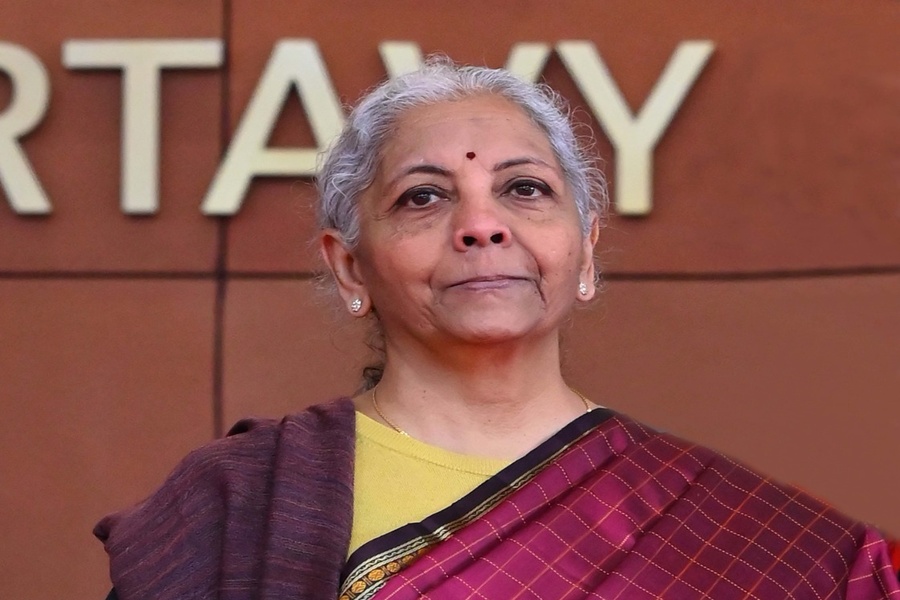
- Union Budget 2026–27 presented by Finance Minister Nirmala Sitharaman, focused on accelerating growth, resilience, and inclusive development
- Emphasis on manufacturing, infrastructure, energy security, social welfare, and sustainability
- Positions India as a global hub for innovation and production through targeted investments
- Balances economic ambition with ease of living, education, healthcare, and environmental responsibility
Economic Reforms & Governance
- Over 350 reforms implemented since Independence Day 2025
- GST simplification
- Notification of Labour Codes
- Rationalisation of Quality Control Orders
- Continued reforms in customs, indirect taxes, and direct taxation
- Proposals shaped by ideas from Viksit Bharat Young Leaders Dialogue 2026, making it a youth-driven budget
Capital Expenditure & Infrastructure
- Record public capital expenditure of Rs 12.2 lakh crore
- Effective capex at 4.4% of GDP, highest in the last decade
- Special Assistance to States for Capital Investment (SASCI) increased by 23% to Rs 1.85 lakh crore
- New Dedicated Freight Corridor from Dankuni (East) to Surat (West)
- 20 new National Waterways to be operationalised over five years
- Launch of Coastal Cargo Promotion Scheme to shift freight from rail and road
- Development of City Economic Regions (CERs) with Rs 5,000 crore per region over five years
Transport & Urban Development
- Creation of seven High-Speed Rail corridors:
- Mumbai–Pune
- Pune–Hyderabad
- Hyderabad–Bengaluru
- Hyderabad–Chennai
- Chennai–Bengaluru
- Delhi–Varanasi
- Varanasi–Siliguri
Climate, Energy & Sustainability
- Rs 20,000 crore investment over five years for Carbon Capture Utilisation and Storage (CCUS) across five industries
- Integrated development of 500 reservoirs and Amrit Sarovars to boost fisheries
Agriculture & Rural Economy
- Promotion of high-value agriculture:
- Coastal areas: coconut, sandalwood, cocoa, cashew
- Hilly regions: almonds, walnuts, pine nuts
- Launch of Coconut Promotion Scheme to replace old trees and improve productivity
- Dedicated cashew and cocoa programmes targeting self-reliance and global competitiveness by 2030
- Rollout of Bharat-VISTAAR, an AI-based farm advisory integrating AgriStack and ICAR practices
Women, MSMEs & Social Inclusion
- Establishment of SHE-Marts as community-owned retail outlets for rural women-led enterprises
- Divyangjan-focused schemes:
- Kaushal Yojana for livelihoods in IT, AVGC, hospitality, and food sectors
- Sahara Yojana for assistive devices
Health & Education
- Expansion of mental health infrastructure:
- New NIMHANS-2 in North India
- Upgradation of institutes in Ranchi and Tezpur
- 50% increase in emergency and trauma care capacity in district hospitals
Regional Development
- Boost to Purvodaya states and Northeast through:
- East Coast Industrial Corridor with a node at Durgapur
- Development of five tourism destinations
- Deployment of 4,000 e-buses
- Development of Buddhist Circuits across Arunachal Pradesh, Sikkim, Assam, Manipur, Mizoram, and Tripura
Financial Sector & Investment
- Formation of a High-Level Committee on Banking for Viksit Bharat
- Review of foreign investment rules
- Incentives for large municipal bond issuances
- Expanded investment limits for Persons Resident Outside India (PROI) in listed companies
Fiscal Position
- Fiscal deficit for FY 2025–26 retained at 4.4% of GDP
- Aligned with the glide path to reduce fiscal deficit below 4.5%