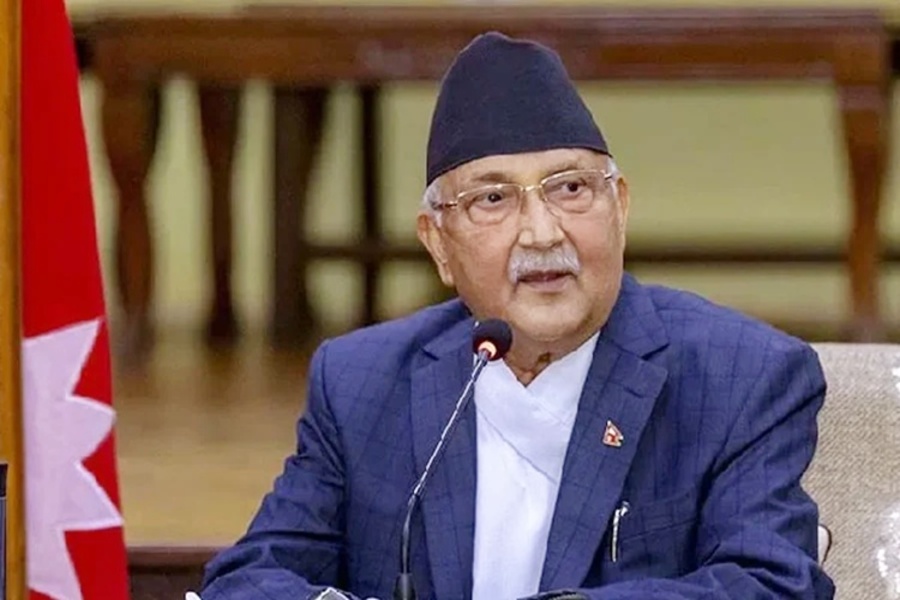
Nepal plunged deeper into political turmoil on Tuesday as Prime Minister KP Sharma Oli resigned amid escalating Gen-Z protests that have claimed 19 lives.
Oli submitted his resignation to President Ram Chandra Poudel, citing the "abnormal situation" in the country as nationwide demonstrations against his government intensified.
In his resignation letter, Oli invoked Article 77(1) of the constitution, stating that he stepped down to allow a constitutional resolution of the ongoing crisis. Oli had assumed office on July 14, 2024, following a consensus agreement with the Nepali Congress, the largest party in parliament.
Reports suggest that Mayor Balen Shah could be considered for the role of interim Prime Minister.
Tensions escalated after Monday’s deadly protests, with the ruling coalition fracturing as ministers, particularly from the Nepali Congress, resigned in protest. General Secretaries of the Nepali Congress, Gagan Thapa and Bishwo Prakash Sharma, had urged Oli to step down, stating that the seven-point agreement between the Communist Party of Nepal (Unified Marxist–Leninist) and Congress no longer held relevance.
Lawmakers from the fourth-largest party, Rastriya Swatantra Party, also resigned en masse, demanding the formation of an interim government.
Protesters, angered by the deaths, targeted government offices and leaders’ residences. They stormed the parliament building in Baneshwor, set it on fire, and entered Singh Durbar, the main administrative center of the government, torching its main gate. Party headquarters of both CPN (UML) and Nepali Congress in the Kathmandu Valley were defaced and burned. Local media reported similar incidents in other parts of the country.
The authorities said the situation in Kathmandu remains tense despite curfews imposed by local administrations.
Several ministers, including Home Minister and Agriculture Minister, Minister for Health and Population Pradip Poudel, and Minister for Youth and Sports Teju Lal Chaudhary, resigned, expressing regret over the use of force against the protesters.
Social media circulated videos showing the torching of Oli’s residence in Balakot, Bhaktapur. Protesters also attacked the homes of former Prime Ministers Dahal and Deuba, President Ram Chandra Poudel, and former Home Minister Ramesh Lekhak.
Chief District Officers in Lalitpur and Bhaktapur confirmed that the situation across their districts remained tense, with security forces exercising maximum restraint and avoiding the use of lethal force against demonstrators.
Nepal now faces an uncertain political future as the country grapples with widespread unrest and calls for an interim administration.