
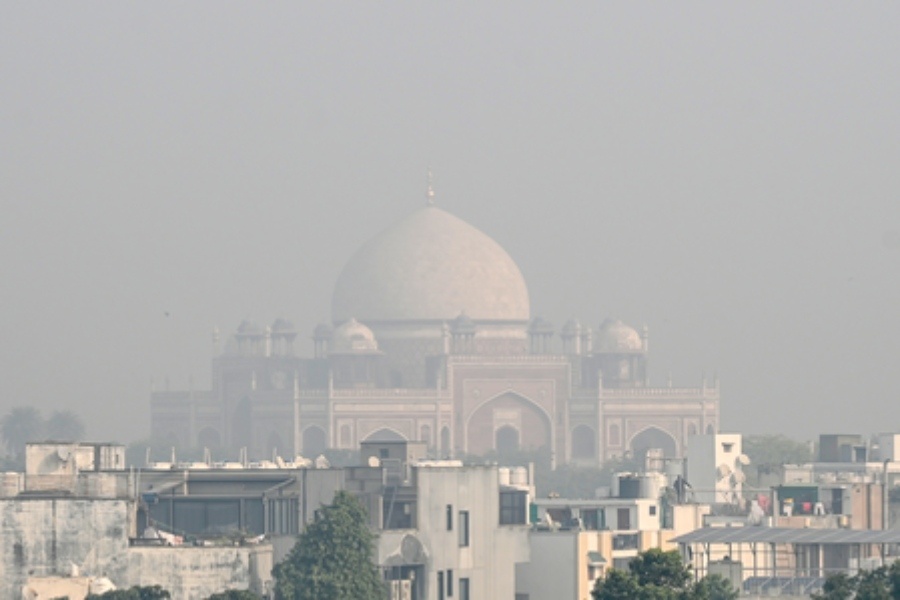
Delhi’s air quality plunged further on Friday, with the city recording an Air Quality Index (AQI) of 385—firmly placed in the “very poor” category. Residents across Delhi-NCR, already grappling with a harsh cold wave, faced yet another day of hazardous pollution levels.
The fresh spike in pollutants comes just a day after authorities withdrew the Graded Response Action Plan (GRAP) Stage-III curbs, which are enforced during severe pollution episodes.
The respite was short-lived, as the AQI shot up rapidly within 24 hours—from 327 on Wednesday to 377 on Thursday—marking a sharp deterioration.
Despite the worsening conditions, the Commission for Air Quality Management (CAQM) stated that Stage-III restrictions would be reimposed only if the AQI crosses 400, which would place Delhi in the “severe” category. For now, the situation will be monitored without reinstating stricter measures.
Data from the Central Pollution Control Board (CPCB) shows that pollution levels climbed steadily throughout Thursday. With wind speeds remaining extremely low, pollutants accumulated over the region. The AQI rose from 351 at 8 a.m. to 381 by 7 p.m., reflecting a continuous build-up of particulate matter.
Meteorologists noted that winds remained nearly stagnant for most of the day, occasionally picking up to just 4–5 kmph—far too weak to disperse the dense layer of pollutants. Forecasts indicate that air quality in the national capital is expected to remain in the “very poor” range for the coming days.
The ongoing cold wave has only deepened the crisis. Low temperatures, fog, and high humidity are trapping pollutants close to the surface, worsening breathing conditions. Minimum temperatures in Delhi-NCR and several parts of North India have dropped to between 8 and 12 degrees Celsius.
A thick shroud of haze lingered over the city from morning and returned after sunset, causing poor visibility on roads and slowing down traffic movement.
Health experts caution that prolonged exposure to such toxic air can trigger severe health issues, particularly for children, senior citizens, and individuals with respiratory or cardiovascular ailments. They advise residents to minimize outdoor movement, avoid vigorous activities outside, and step out only when absolutely necessary.