India will need over $10 trillion by 2070 to achieve its Net-Zero ambitions, and to this end, the country is creating innovative blended finance mechanisms that channel public funds to de-risk and accelerate private investment in renewable energy, energy efficiency, electric mobility, waste-to-wealth projects, and nature-based solutions, Union Environment Minister Bhupender Yadav said on Thursday.
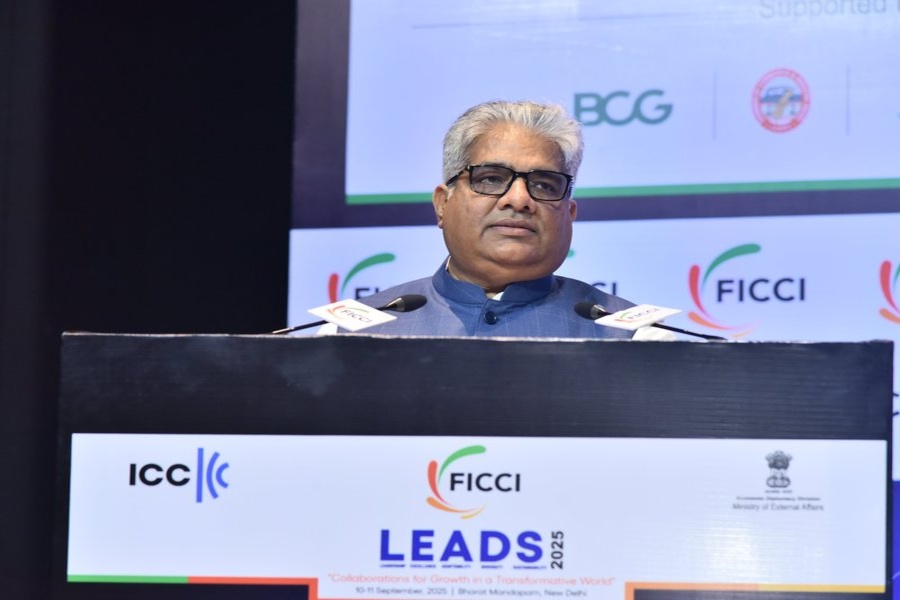
Speaking at the 4th edition of FICCI’s LEADS event, Yadav said the 21st century places a “twin responsibility” on India — meeting the developmental aspirations of its young and ambitious population while safeguarding the planet from climate change, biodiversity loss, and ecological degradation.
“Under Prime Minister Narendra Modi’s leadership, India has chosen a path of ambition, innovation, and transformation,” he said, lauding industry for pursuing economic growth alongside ecological sustainability.
Delivering a keynote on Green Financing, Yadav stressed that future economies must align progress and profits with sustainability, placing people and ecosystems at the centre of growth. Collaborative efforts by governments, industry, regulators, financial institutions, and citizens are vital, he added.
Tracing the history of industrialisation, the minister pointed out that unsustainable growth has led to global environmental degradation and warned that the rising temperature thresholds of 1.5–2°C represent not just scientific markers but real-world consequences. “Industry must weigh not just profit figures but also the environmental costs hidden behind them,” he cautioned.
Yadav underlined that green finance should not be treated as a niche intervention but as the backbone of competitive and resilient economies. Every investment—whether in infrastructure, agriculture, transport, or industry—must deliver economic returns while strengthening sustainability, he said.
Citing examples, he noted that India’s issuance of sovereign green bonds has drawn wide international interest, reflecting strong global confidence in the country’s green development agenda. Regulators such as the RBI and SEBI are also pushing for greater transparency and accountability in green instruments, helping build long-term trust in the sector.
The minister highlighted the government’s Green Credit Programme, launched in October 2023, as an innovative tool to encourage individuals and institutions to voluntarily undertake eco-restoration and other positive environmental actions.
He emphasised that financing mechanisms for the green transition must be inclusive, ensuring benefits for MSMEs, farmers, and vulnerable communities.