India has become the world’s second-largest freight-carrying rail network, with freight loading rising from 1,233 million tonnes (MT) in 2020–21 to 1,617 MT in 2024–25, Union Railway Minister Ashwini Vaishnaw informed the Lok Sabha on Thursday.
He said that despite rising input costs, freight charges have remained unchanged since 2018 to ensure the Railways remains competitive for bulk transportation.
Vaishnaw also stated that passenger fares were rationalised from July 1, 2025, after a gap of more than five years. The fare increase is minimal — ranging from half a paise per km to two paise per km for premium classes.
Among the measures to keep travel affordable are:
• No fare hike in General Class for journeys up to 500 km, and only a half-paise per km increase thereafter.
• A half-paise per km increase for Sleeper Class Ordinary and First Class Ordinary.
• A one-paise per km increase for Non-AC Mail/Express classes.
• A two-paise per km increase for AC-reserved classes.
To protect low- and middle-income travellers, fares for Monthly Season Tickets (MST) and suburban train services have not been revised.
Freight Infrastructure Expansion
The minister outlined a series of initiatives undertaken to boost freight capacity and revenue. Expansion of the rail network has been prioritised through extensive construction of new lines, multi-tracking of congested routes, and gauge conversion.
As of April 1, 2025, a total of 431 projects are sanctioned — 154 new lines, 33 gauge-conversion projects and 244 doubling projects.
Electrification and Rolling Stock Increase
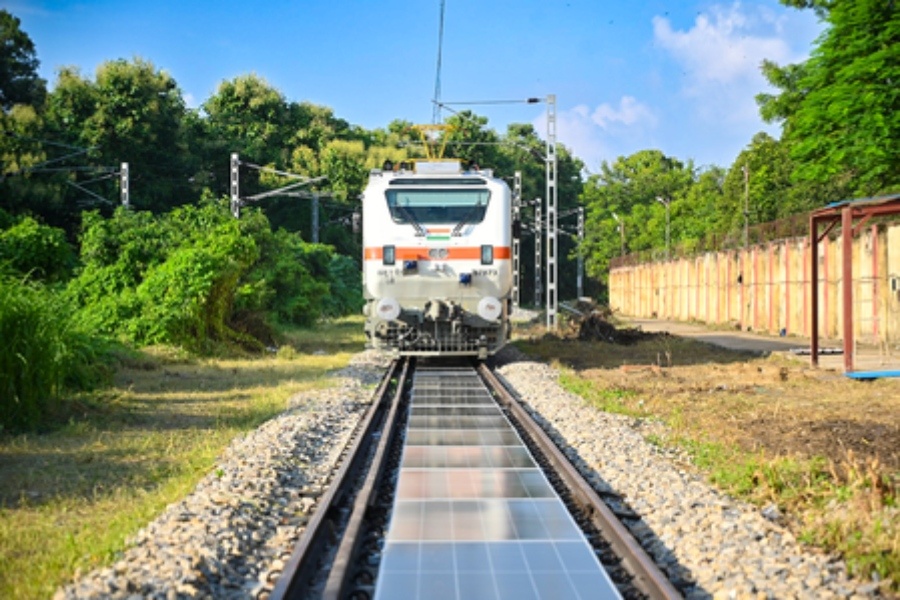
Indian Railways has electrified 99.1 per cent of its broad-gauge network, achieving near-total electrification. To support growing freight demand, procurement of rolling stock has been significantly scaled up. Between 2014 and 2025, the Railways acquired nearly 2 lakh wagons and added more than 10,000 locomotives.
Vaishnaw said these measures collectively strengthen capacity, efficiency, and sustainability across the national railway network.