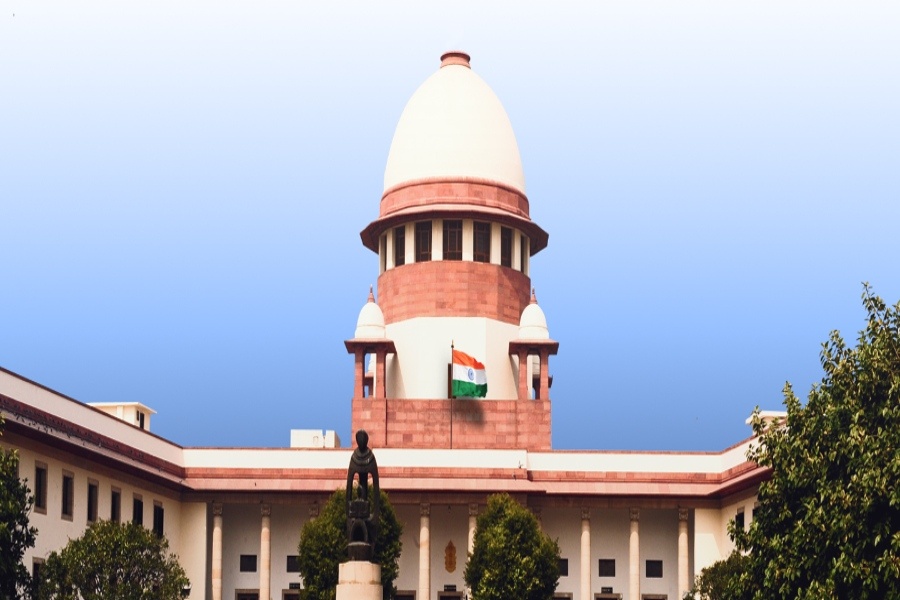
The Supreme Court on Monday refused to stay the Waqf (Amendment) Act, 2025 in its entirety, observing that legislation enjoys a presumption of constitutionality and can only be halted in the “rarest of cases.”
A Bench led by Chief Justice of India B.R. Gavai, along with Justice A.G. Masih, however, stayed two contentious provisions.
The first required five years of practising Islam for creating a waqf; the second empowered a designated executive officer to decide disputes over encroachment of government land by waqf properties. The Bench noted that adjudication of property rights cannot be entrusted to an executive officer as it violates the principle of separation of powers.
“Till adjudication happens by the tribunal, no third-party rights can be created against any parties,” the court directed.
In its interim order, the apex court also:
Directed that state waqf boards should have no more than three non-Muslim members, while the Central Waqf Board should not exceed four.
Declined to stay the mandatory registration of waqf properties, pointing out that the requirement already existed under previous laws.
The detailed order is yet to be uploaded on the Supreme Court’s website.
The court had earlier reserved its decision on May 22 after three rounds of hearings on petitions challenging the law. The Centre has defended the Act as a step to ensure transparency and curb misuse of waqf properties, while petitioners, including AIMIM MP Asaduddin Owaisi and Congress MP Mohammad Jawed, argued that it discriminates against Muslims.
The Waqf (Amendment) Act, 2025—amending the Waqf Act, 1995—received Presidential assent on April 5 and came into effect shortly after. A previous Bench led by then CJI Sanjiv Khanna had also declined to grant a blanket stay on April 17, following the Centre’s assurance that certain provisions would not be enforced immediately.