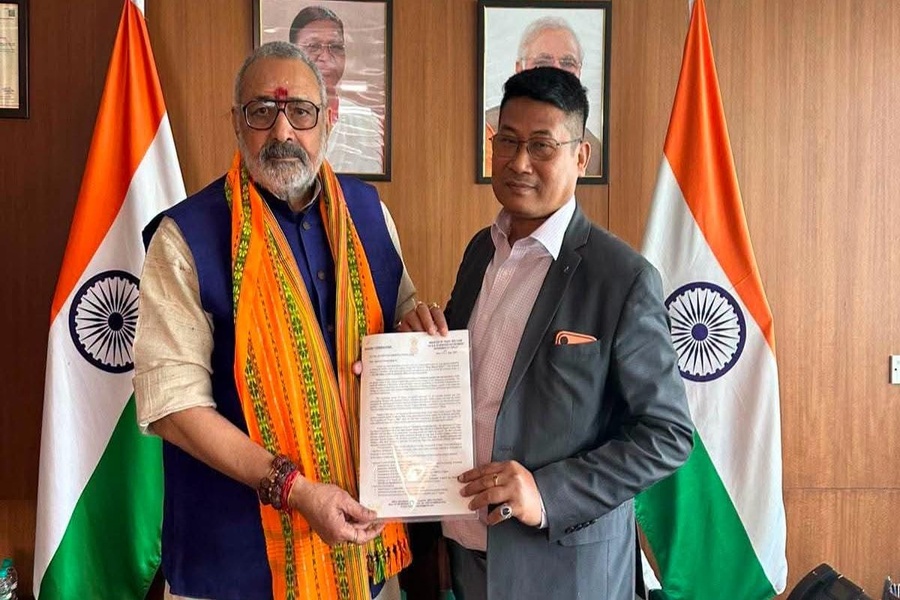
Tripura Tribal Welfare Minister Bikas Debbarma today met Union Minister for Textiles Giriraj Singh in New Delhi to discuss a comprehensive roadmap for the development of the state's textile, handloom, handicraft and sericulture sectors.
During the meeting, Debbarma presented a series of strategic proposals aimed at strengthening Tripura's traditional industries and enhancing their presence in national and international markets. The proposals included the establishment of an Integrated Textile Park, a Silk Park, a National Institute of Design (NID), an Indian Institute of Handloom Technology (IIHT), and a Central Silk Reeling School (CSRS) in the state.
The minister also highlighted the need to promote bamboo-, pineapple-, and banana fibre-based industries, develop craft villages and a handicrafts museum, strengthen export infrastructure, and improve institutional capacity to support artisans, weavers and entrepreneurs.
The discussions also focused on aligning Tripura's textile and handicraft sector with national initiatives such as Viksit Bharat @2047, Vocal for Local, Make in India, and Textiles for Global Markets. Debbarma emphasized Tripura's rich heritage in handloom, bamboo and cane handicrafts, sericulture, and tribal craftsmanship, stating that the state has significant potential to emerge as a key contributor to India's textile economy.
Expressing optimism after the meeting, Debbarma said that with the Central Government's support, the proposed initiatives would create new opportunities for weavers, artisans, sericulture farmers, women's self-help groups, and young entrepreneurs, while generating employment and boosting the state's economy.
He reaffirmed the Tripura Government's commitment to working closely with the Centre to preserve and promote the state's traditional crafts and textile heritage, ensuring their recognition in both domestic and global markets.