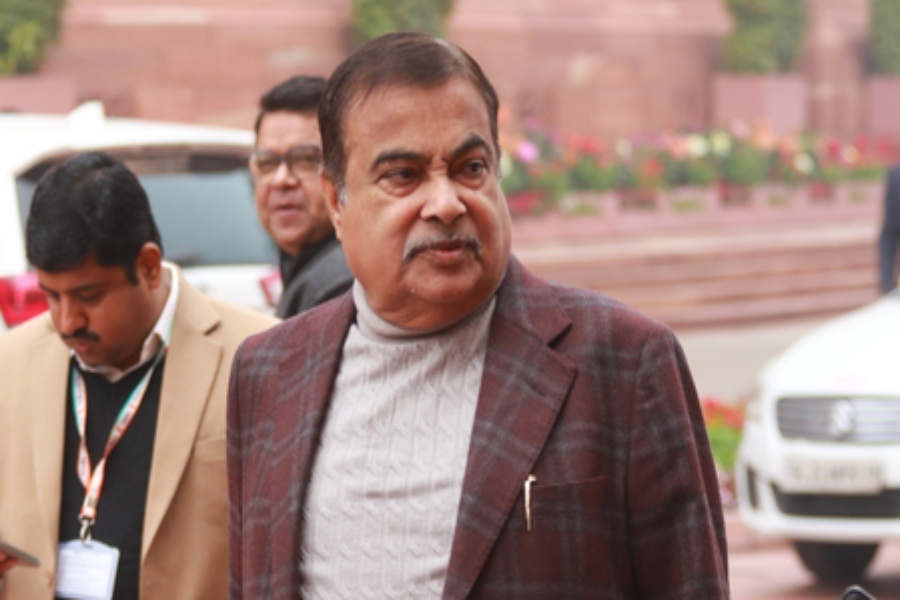
Union Road Transport and Highways Minister Nitin Gadkari on Sunday welcomed the strong emphasis on infrastructure in the Union Budget 2026–27, stating that the government’s initiatives reflect a vision that views infrastructure as “an enabler of resilience, opportunity, and global competitiveness.”
Gadkari said the latest budget places infrastructure at the core of India’s journey towards achieving the goal of a Viksit Bharat by 2047.
Finance Minister Nirmala Sitharaman, while presenting the Union Budget for 2026–27, announced a robust thrust on infrastructure development, underlining sustained public investment as a key driver of economic growth and balanced regional development.
Responding to the Budget in a post on X, Gadkari said, “Union Budget 2026 places infrastructure at the heart of India’s journey towards Viksit Bharat 2047. With a clear focus on connectivity, manufacturing depth, and regional balance, the Budget outlines a decisive push to build world-class, future-ready infrastructure.”
Highlighting measures in the transformational connectivity sector, the Minister pointed to the announcement of 20 new National Waterways aimed at strengthening logistics and inter-regional mobility. He also noted that seven high-speed railway corridors will significantly enhance passenger and freight efficiency.
Gadkari further said that the proposed dedicated Rare Earth Corridors in Odisha, Kerala, Andhra Pradesh, and Tamil Nadu will bolster critical mineral supply chains and support strategic industries.
On infrastructure support for manufacturing and strategic sectors, he said the Budget introduces initiatives to scale up domestic manufacturing in frontier and strategic areas. These include Biopharma SHAKTI to strengthen life sciences infrastructure, India Semiconductor Mission (ISM) 2.0 to expand chip manufacturing capacity, the Electronics Components Manufacturing Scheme to reinforce value-chain integration, the development of three dedicated Chemical Parks for cluster-based industrial growth, and a scheme to revive 200 legacy industrial clusters to unlock productivity and employment.
The Union Minister also described urban infrastructure as a key growth engine, noting that the Budget recognises the expanding role of Tier II and Tier III cities.
“Recognising the growing importance of Tier II and Tier III cities, the government will continue to prioritise infrastructure development in cities with populations above five lakh. Many of these cities are emerging as new growth centres, innovation hubs, and employment anchors,” he said.
Summing up, Gadkari stated that the Budget presents a clear and forward-looking vision, positioning infrastructure not merely as physical assets, but as a foundation for resilience, opportunity, and India’s global competitiveness.