Chief Minister Prof. Dr. Manik Saha on Monday stated that the Drinking Water and Sanitation Department is working in a mission mode to ensure regular and sustainable piped drinking water supply to every rural household across the state.
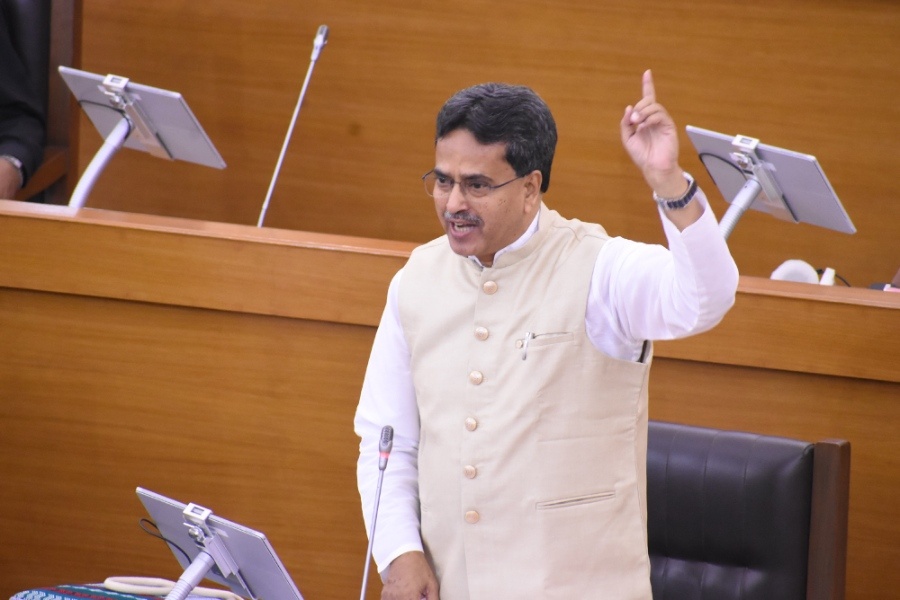
Addressing a calling attention notice raised by MLA Shambhu Lal Chakma on the final day of the budget session of the Tripura Legislative Assembly, the Chief Minister highlighted the government’s proactive efforts to strengthen water infrastructure while conserving groundwater resources.
Dr. Saha informed the House that 154 surface water-based treatment plants, including both small and large units as well as innovative systems, are currently operational in the state. Of these, 136 are located in rural areas and 18 in urban regions.
He emphasized that the government is prioritizing surface water sources such as rivers, streams, reservoirs, and springs to reduce dependency on groundwater and maintain ecological balance. However, in areas where surface water is insufficient, deep tube wells (DTWs) are being used to ensure uninterrupted drinking water supply.
“Providing safe drinking water remains a top priority. While surface water-based projects are being expanded, their implementation requires significant investment and time,” Dr. Saha noted.
The Chief Minister further revealed that these initiatives are being carried out under the Jal Jeevan Mission, with a focus on long-term sustainability. He added that only 10.06% of the state’s annual groundwater recharge is currently being utilized, which is significantly lower compared to the national average of 60.63%. Tripura’s annual groundwater recharge stands at 1.24 billion cubic meters (BCM), while withdrawal is limited to 0.12 BCM.
In addition to the existing infrastructure, the government has undertaken the construction of one surface water treatment plant in an urban area and 71 such plants in rural regions. These projects are spread across multiple blocks, including Sabroom, Dashda, Jampui Hill, Kadamtala, Kumarghat, Chawmanu, Manu, Amarpur, Karbook, and several others.
Moreover, plans are in place to establish similar treatment facilities in 27 additional blocks, further strengthening the state’s water supply network.
Reaffirming the government’s commitment, Dr. Saha said that these initiatives aim not only to ensure safe drinking water for all but also to protect and conserve groundwater resources for future generations.